
Carter Malkasian is Wrong About The Taliban (Again)
The Taliban haven't moderated, Al Qaeda hasn't disappeared, and Afghanistan isn't the peaceful success story some now claim.
I’ve been reading Carter Malkasian’s books and articles for decades: War Comes to Garmser, Illusions of Victory, and America’s War in Afghanistan. He’s an esteemed scholar with a PhD in military history from Oxford University and currently serves as Chair of the Defense Analysis Department at the Naval Postgraduate School in sunny California.
Carter knows Afghanistan. Like me, he speaks Pashto. Like me, he served on a Provincial Reconstruction Team. He spent two years in Helmand with the State Department and later served as an advisor to the U.S. commander in Afghanistan from 2013 to 2014.
I have a great deal of respect for Carter’s service. He did a tremendous amount of good for the Afghan people during his tours. War Comes to Garmser was on my recommended reading list for junior officers preparing to deploy to Afghanistan.
Nevertheless, Carter has been wrong about Afghanistan before, and he makes a host of errors in his recent Foreign Affairs article, “The Afghan Reckoning: Forever Wars and the Costs of Collective Forgetting.” Some are frustrating because they omit important evidence. Others are so detached from the facts on the ground that they are difficult to reconcile with the available reporting.
Before getting into the article, it’s worth revisiting America’s War in Afghanistan. The book was published only weeks before Kabul fell, and if you read it closely enough you can almost see the intellectual pivot taking place.
As Paul Miller wrote in his outstanding book Choosing Defeat: The Twenty-Year Saga of How America Lost Afghanistan, Carter “not only records the Taliban perspective; he essentially adopts it.”
He argues that the Taliban enjoyed superior morale because they embodied a version of Islam widely admired by Afghans. But the Taliban practice a strain of Deobandism that was imported from Pakistan and differs in important ways from Afghanistan’s traditional religious practices.
More astonishingly, Carter writes that “the Taliban stood for what it meant to be an Afghan.”
Again and again, the Asia Foundation—long considered the gold standard for measuring Afghan public opinion—found little sympathy for the Taliban while consistently showing support for the American presence, despite widespread frustration with corruption and the Afghan government. The Taliban certainly enjoyed support in parts of southern and southeastern Afghanistan, but that support declined significantly outside the Pashtun heartland.
I mention this because Dr. Malkasian goes even further in his latest article.
His central thesis is that the Taliban have governed Afghanistan relatively well, prevented the return of international terrorism, and that, in hindsight, America’s twenty-year war was not worth the cost.
His major argument begins here:
More than 775,000 American service members were deployed to Afghanistan, more than 20,700 were injured, and more than 2,400 died—all to defend against a threat that turned out to have been exaggerated.
….
By far the most important turn of events for American and Western interests, however, has been the absence of terrorism. There is little evidence to suggest that al-Qaeda is organizing, fundraising, or training on Afghan territory.
This is simply false.
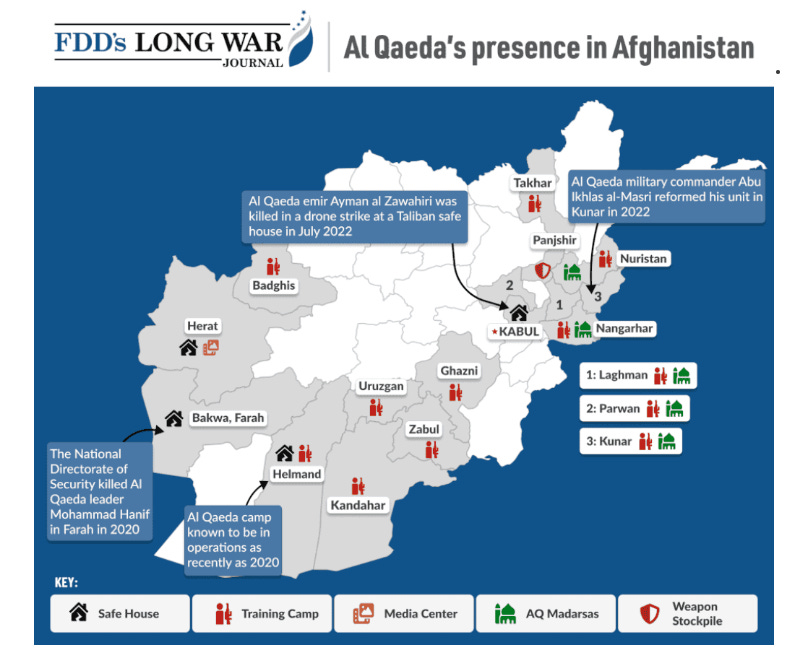
Here is what the UN Sanctions and Monitoring Team wrote in 2024:
Al-Qaida remains strategically patient, cooperating with other terrorist groups in Afghanistan and prioritizing its ongoing relationship with the Taliban. The group continues to operate covertly in order to project the image of Taliban adherence to the provisions of the Doha Agreement to prevent the use of Afghan soil for terrorist purposes. Despite a reduced profile, Al-Qaida disseminates propaganda to increase recruitment while working to rebuild its operational capability. Al-Qaida capacity to conduct large-scale attacks continues to be limited, while its intent remains firm, bolstered by its affiliates’ abilities to carry out external operations.
And this is from Bill Roggio’s Long War Journal:
Al Qaeda now operates training camps in 12 of Afghanistan’s 34 provinces. In its previous two reports, the Monitoring Team reported that Al Qaeda had camps in Ghazni, Laghman, Parwan, Uruzgan, Helmand, Zabul, Nangarhar, Nuristan, Badghis, and Kunar.
Yes, Al-Qaeda has not conducted an attack on the homeland since the Taliban took over. But that does not mean the threat was exaggerated. De facto Al Qaeda leader, Sayf-al Adl, has openly called for fighters to go to Afghanistan. Why? Are they just hanging out and watching old war flicks?
Dr. Malkasian also includes this revealing passage:
As far as I could tell, there was little to suggest that al-Qaeda was active in Garmser or elsewhere in the south.
Dr. Malkasian was in Garmser from 2009-2011. Four years later, U.S. forces uncovered one of the largest al Qaeda training camps found during the entire war in neighboring Kandahar.
An al Qaeda training camp in southern Afghanistan that was the target of a major raid last week had been operating since last November – and the U.S. didn’t learn the full details about the site until July, coalition forces said in an email Wednesday.
…..
“Bottom line is that this camp was built to be a high end training facility to prepare enemy personnel,” the email said. “This camp is unique in its level of technical training. The training camp was broken down by basic and advance training areas. Training ranged from physical fitness, weapons training (small arms to advanced explosive training, indirect fire), chemistry to produce advanced explosives, and higher level sniper training,” coalition forces said.
When you give your enemy time and space, bad things inevitably follow. The absence of an attack is not evidence that no attack is being planned. Sayf al-Adl is not Ayman al-Zawahiri. He is a far more disciplined and methodical military strategist.
As Al Qaeda expert Sarra Harramouch recently wrote in the Modern Warfare Institute:
Al-Adel approaches war from the perspective of a senior military commander concerned with force management, sequencing, and flexibility.
…..
First, high-profile attacks are dormant, not abandoned. Under al-Adel, international terrorism has been deferred, not renounced, with strategically timed violence reserved for favorable conditions. A more professionalized al-Qaeda may strike less often, but when it does, attacks are likely to be more sophisticated and lethal, potentially involving coordinated multicity operations and emerging technologies. As former acting CIA director Michael Morell warned in a podcast we recorded together, al-Adel is likely to “return to the fight against the United States” and to do so “with a major attack.”
Dr. Malkasian then turns to the Taliban's governance:
Yet far from ushering in a new age of chaos and carnage, Taliban rule has instead fostered a period of relative stability. The country has been at peace for five years, the longest stretch since 1979, when a Soviet invasion was followed by decades of war. Other than periodic attacks by the Islamic State, resistance to the regime has been minimal.
Here’s how minimal the resistance has been in Afghanistan over the past weekend:
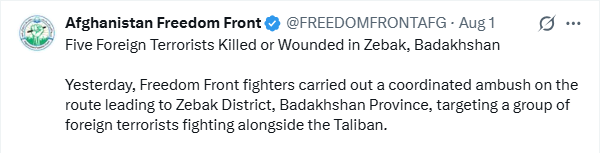
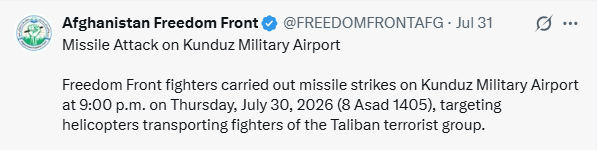
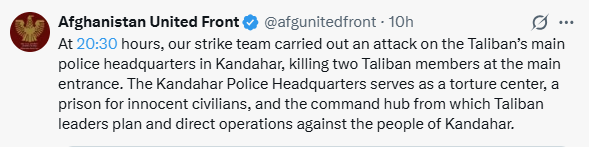
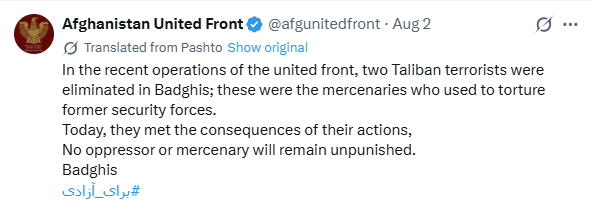
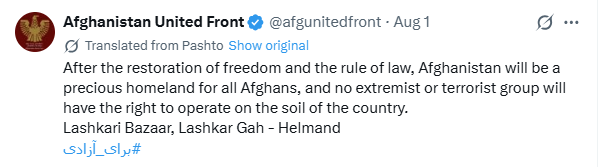
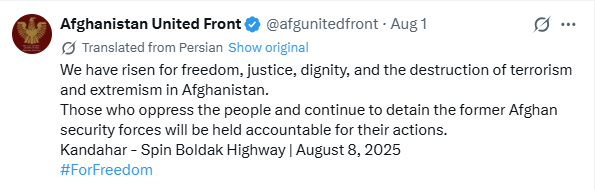
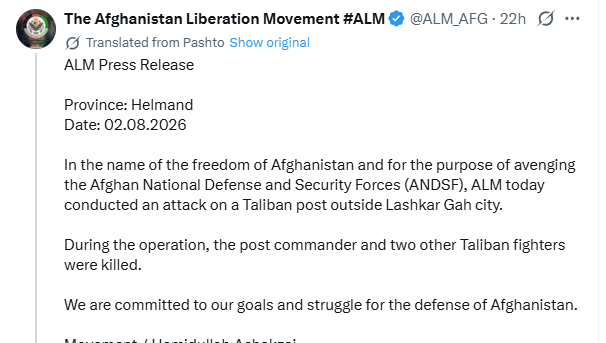
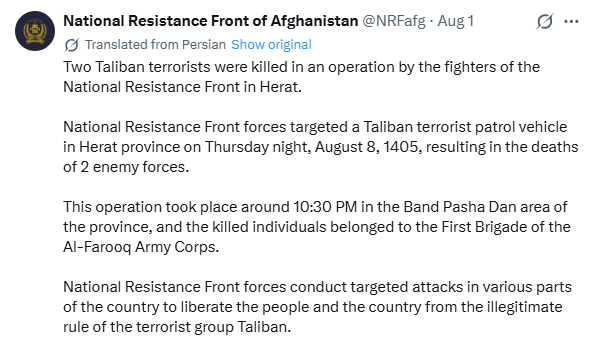
If Dr. Malkasian wants to argue these resistance groups do not pose an existential threat to the Taliban, I agree. But that is a very different argument than claiming resistance has been minimal. Afghanistan today hosts multiple armed resistance organizations representing several ethnic communities. They are fragmented, under-resourced, and lack meaningful foreign support. Yet they have sustained combat operations against the Taliban for five years without a sanctuary or outside patron.
That is hardly the picture of a country enjoying uncontested peace.
Dr. Malkasian isn’t finished praising Taliban governance.
He writes:
Since retaking control, the Taliban have not ruthlessly oppressed the Afghan people. The group has not systematically imprisoned its former adversaries or those who worked with the United States, its allies, or the Afghan government. Taliban governors and judges have generally permitted those people to go on with their lives.
Now, to be fair to Dr. Malkasian, does write about some of the Taliban’s dreadful policies regarding Afghan women. But he omits more than he includes.
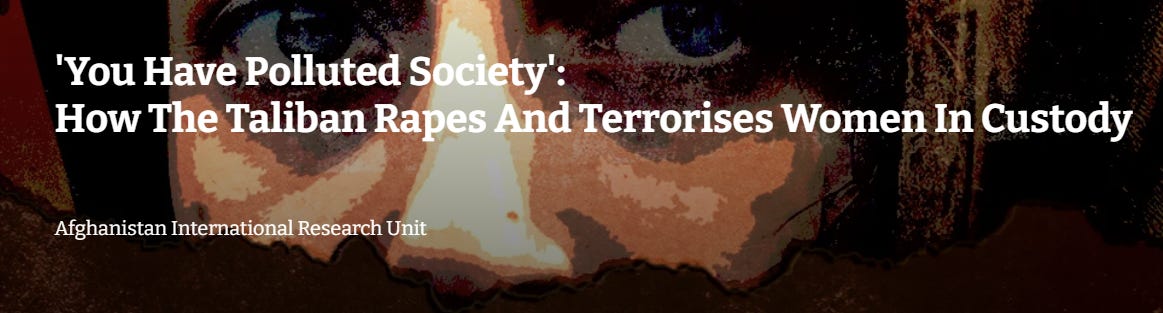
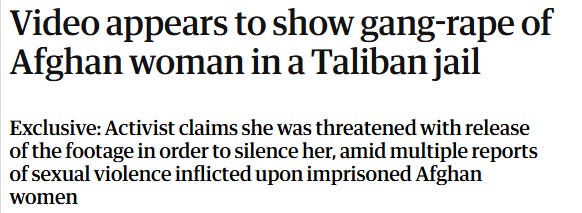
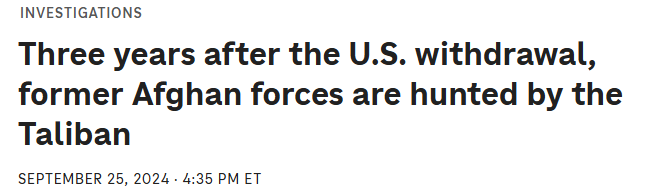
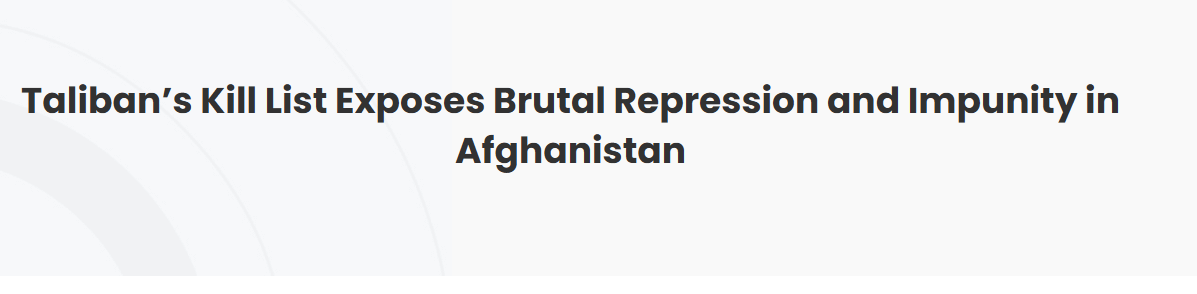
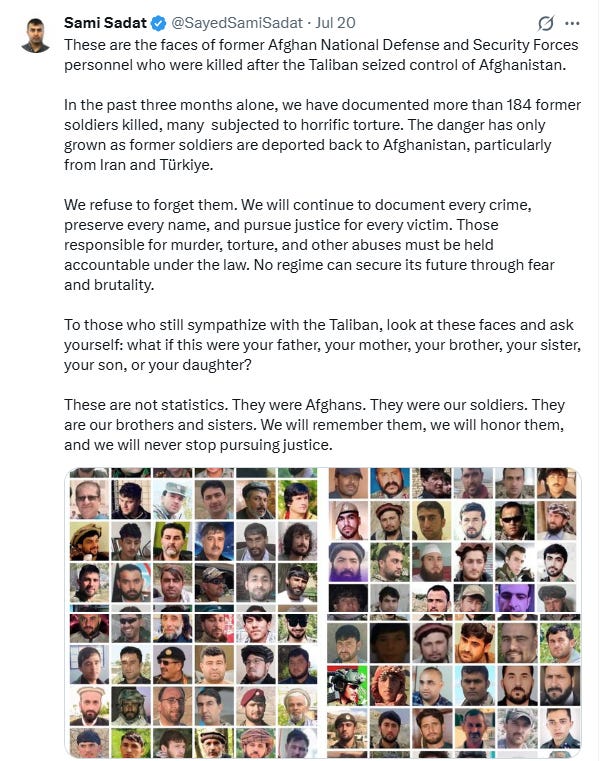
I still receive text messages from former interpreters, commandos, and police officers trapped behind enemy lines. They are not living peacefully under Taliban governors.
I could go on, but I think you get the gist.
The remainder of Dr. Malkasian’s article examines why the United States stayed in Afghanistan for two decades and what lessons policymakers should draw from the war. While I disagree with portions of his analysis, much of it is thoughtful and worth reading.
The problem lies elsewhere.
If Dr. Malkasian wants to argue that the war ultimately wasn’t worth its enormous cost, I would largely agree.
If he wants to argue that even though the Taliban remain a brutal regime that harbors al Qaeda, the United States now possesses the intelligence and strike capabilities to manage that threat without a permanent military presence, that’s also a legitimate argument.
But portraying Taliban rule as relatively calm or suggesting that the Taliban have prevented al Qaeda from rebuilding in Afghanistan simply is not supported by the available evidence.
As the fifth anniversary of Kabul’s fall and the twenty-fifth anniversary of the September 11 attacks approach, we are likely to see more attempts to reinterpret America’s longest war.
There is nothing wrong with reexamining history. But reexamining history is not the same thing as rewriting it.
The Taliban remain one of the world’s most repressive regimes. Al Qaeda remains embedded in Afghanistan. And pretending otherwise does not make those realities disappear.
Great piece – and thank you for pushing back on the narrative that the Taliban have brought "stability" or that Al-Qaeda is gone.
I hate this narrative. So few people were knowledgeable about Afghanistan even while we were fighting there. Now, nearly everyone will rely on the analysis of experts like this. The upward climb to get our government to help our allies just got steeper